Home › Commercial Concrete Contractor Services
Partner with a dependable commercial concrete contractor in Staten Island, NY for your next build. We handle site flatwork, foundations, parking areas, and structural concrete for retail, industrial, and multi family projects. Our crews focus on schedule, safety, and quality from layout to final finish. Request a commercial concrete proposal today.
Superior Concrete Staten Island provides professional concrete contractor throughout Staten Island, NY, New York and the surrounding area. Our licensed, insured crew delivers safe, clean, on-time work with a free estimate before anything begins. Call (201) 340-6227 or request your free quote.
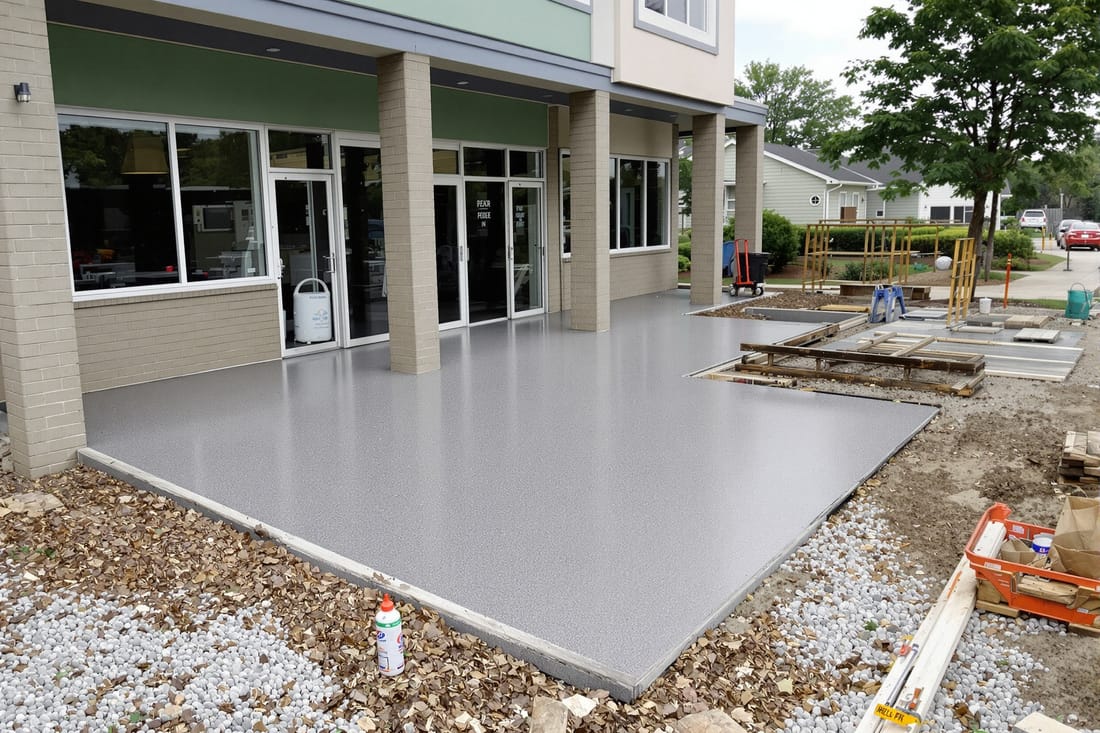
Commercial Concrete Built For Staten Island Businesses
If your business depends on a solid slab, loading area, or entryway, the concrete cannot be an afterthought. At Superior Concrete Staten Island, our commercial concrete contractor team focuses on how your property is actually used from the weight of delivery trucks at your loading dock to foot traffic in your storefront so the concrete holds up in real Staten Island conditions.
Commercial concrete work starts with a site walk. We look at drainage patterns, how close you are to the water, existing pavement conditions, and nearby structures. In Staten Island, many commercial buildings sit on filled land or older industrial sites, so we pay close attention to soil stability and any signs of settlement or cracks in existing slabs.
Next, we discuss how your business operates. A restaurant or retail plaza needs smooth, slip resistant walkways and ADA compliant ramps. A warehouse in West Shore or Travis needs thicker, reinforced slabs that tolerate forklifts and pallet racks. Parking lots near the waterfront often need stronger concrete mixes and better drainage to stand up to freeze-thaw cycles and salt exposure.
We then recommend specific concrete thickness, reinforcement type, and mix design so you understand what you are paying for. Instead of generic promises, we explain why a 6 inch slab with rebar might be right for your loading dock, while a 4 inch fiber reinforced slab is enough for a light use service area. The goal is simple: commercial concrete that does the job without paying for unnecessary extras.
How Our Commercial Concrete Process Works, Step by Step
When Superior Concrete Staten Island handles a commercial concrete project, we break the work into clear, predictable stages so your operation experiences as little disruption as possible.
1. Site assessment and measuring. We verify property lines, confirm elevations with a laser level, and locate utilities. On older Staten Island commercial properties, underground surprises are common, so we coordinate mark-outs and adjust layouts to avoid conflicts.
2. Design and specification. We provide a written scope that spells out slab thickness, reinforcement layout, concrete strength (PSI), and control joint spacing. For example, a typical small warehouse floor might be a 6 inch slab, 4000 PSI concrete, #4 rebar on 18 inch centers, and saw-cut joints every 10 to 12 feet, but we adjust for your specific loads.
3. Demolition and subgrade prep. If existing pavement or slabs are failing, we break and remove them, then inspect the base underneath. Soft spots are compacted or replaced with crushed stone. Skipping this step is why many commercial slabs crack or settle, so we take time here even when it is not visible in the final product.
4. Forms, layout, and reinforcement. We set forms to the correct elevation and slope for drainage, usually 1 to 2 percent away from buildings and entrances. Rebar, welded wire mesh, or fiber reinforcement is installed according to plan. In loading areas we often use dowels to tie new concrete into existing slabs so the edges do not break under truck wheels.
5. Pouring, finishing, and curing. We schedule pours around your business hours whenever possible. Fresh concrete is leveled, bull-floated, and then finished depending on use: broom finish for exterior walkways and parking, trowel finish for interior floors, or light broom with edge tooling for ramps. We then cut control joints at the right time so the concrete cracks in straight, controlled lines instead of randomly. Finally, we apply curing methods (curing compound or wet cure) and, where needed, sealers to improve durability and appearance.
Material Options and Finishes for Staten Island Commercial Properties
Different commercial uses call for different concrete solutions, and the right choice will affect both performance and appearance for years.
Concrete mix design: For most Staten Island commercial work, we recommend 4000 PSI or stronger concrete, especially in parking lots, drive lanes, and loading docks. In coastal or high salt areas like near the Outerbridge or Shore Acres, we may specify air-entrained concrete and higher quality aggregates to better resist salt, freeze-thaw damage, and scaling.
Thickness and reinforcement: Light duty sidewalks often use 4 inches of concrete, but dumpster pads, drive lanes, and delivery areas typically need 6 to 8 inches with rebar or heavy wire mesh. Inside warehouses or garages, we may incorporate fiber reinforcement to reduce micro-cracking and improve impact resistance. For projects that might be expanded later, we design edges and dowels so future slabs can be connected cleanly.
Finishes: Exterior surfaces almost always get a broom finish for slip resistance, especially around entries, ramps, and pedestrian paths. Interior floors can be trowel finished, power troweled to a tighter, more polished surface, or prepared for epoxy or other coatings. For higher visibility storefronts or office plazas, we can use decorative options like colored concrete, exposed aggregate bands, or saw-cut patterns that make the space look more professional without sacrificing durability.
Drainage and slopes: Many older Staten Island commercial sites have ponding water around entrances and drive lanes. When we pour new concrete, we adjust elevations and pitch so water flows to drains or designated low points, not toward your building or neighboring properties. Addressing these details reduces slip hazards, ice buildup, and long-term freeze damage.
What Drives Cost and Timeline for Commercial Concrete in Staten Island
Commercial concrete pricing is driven by more than just the size of the slab. Understanding the main cost factors helps you compare proposals fairly.
Subgrade and access: If we can easily get trucks and equipment to the pour area, costs stay lower. Tight alleys, limited access behind strip malls, or interior courtyard areas often require smaller equipment or concrete pumps, which add to the budget. Poor soil, buried debris, or the need to build up base stone to fix old settlement also affects cost.
Thickness, reinforcement, and strength: Heavier duty concrete costs more because it uses more materials and labor. A 4 inch broom-finished sidewalk with fiber reinforcement is very different from an 8 inch rebar reinforced loading dock slab designed for regular semi-truck traffic. We explain these differences so you can align the design with how the area will actually be used.
Scheduling and phasing: For active businesses, we often phase work so you can stay open. That might mean working early mornings, weekends, or splitting parking lot pours so some spaces remain available. Phasing and off-hour work can add cost, but often saves you lost revenue and customer inconvenience.
Permits and inspections: In Staten Island, some commercial concrete projects require permits or approvals, especially when altering drainage, sidewalks, or curb cuts. We can coordinate with your architect or engineer and follow city requirements so the work passes inspection the first time.
Weather and curing time: Concrete needs time to gain strength. For heavy traffic areas, we usually recommend at least 7 days before full vehicle use, although light foot traffic can often resume sooner. In colder months, we may use accelerators, blankets, or adjusted schedules to protect the concrete as it cures, and those protections are built into our planning and pricing.
Choosing the Right Concrete Contractor for Your Staten Island Commercial Project
A commercial concrete job is an investment that should last decades, so picking the right contractor matters more than shaving a few dollars off the quote. At Superior Concrete Staten Island, we focus on clear communication, realistic scheduling, and work that holds up under real commercial use.
For any commercial concrete contractor you consider, ask for project examples that match your type of property. A company that only pours residential driveways might not be prepared to handle the load requirements of a warehouse slab or the coordination needed for a busy retail plaza. We can walk you through similar Staten Island projects, explain what was done, and share what we learned from each site.
Ask to see the written scope of work, not just a lump sum price. You should know slab thickness, reinforcement type, joint spacing, and concrete strength. If a quote leaves out these details, it becomes hard to tell whether you are getting a durable commercial solution or a basic residential-style pour that might not hold up.
Insurance and safety are also critical. Commercial work often involves customer traffic, employees on-site, and coordination with other trades. Our team maintains proper insurance, follows safety protocols, and communicates clearly about which areas will be closed and for how long so your staff and customers are protected.
Finally, consider how the contractor handles unexpected conditions. Older Staten Island properties frequently hide issues like buried concrete, poor fill, or outdated storm drains. We discuss options with you as soon as these are discovered and adjust the plan in writing so there are no surprises. When you hire Superior Concrete Staten Island, you get a partner who treats your business as if it were our own, with commercial concrete that is designed, built, and finished to work for the way you actually operate.