Home › Commercial Concrete Slabs and Flatwork
Get durable, level commercial concrete slabs and flatwork in Staten Island, NY for warehouses, shops, and site paving. We pour high performance floors, loading docks, and heavy duty aprons to spec. Our team manages layout, reinforcement, and finishing to meet structural and flatness requirements. Request a commercial slab and flatwork estimate today.
Superior Concrete Staten Island provides professional commercial concrete slab throughout Staten Island, NY, New York and the surrounding area. Our licensed, insured crew delivers safe, clean, on-time work with a free estimate before anything begins. Call (201) 340-6227 or request your free quote.
Commercial Concrete Slabs for Staten Island Businesses
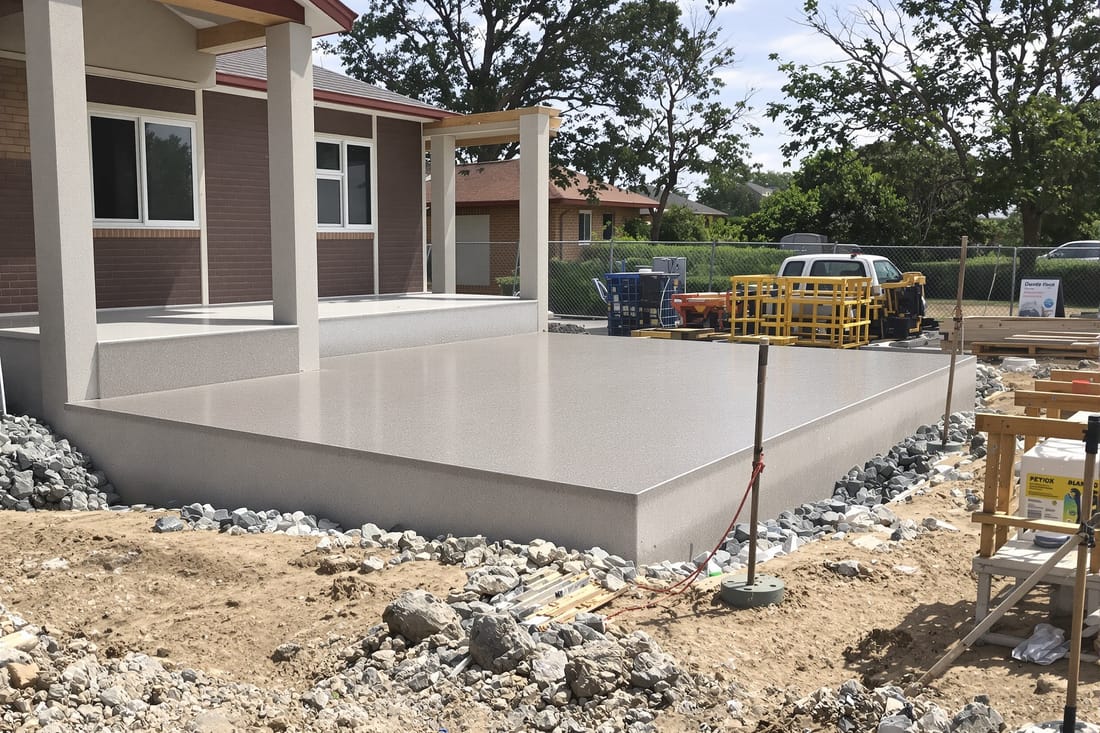
Superior Concrete Staten Island installs and repairs commercial concrete slabs and flatwork for properties across Staten Island, from older mixed‑use buildings along Victory Boulevard to newer commercial sites near the West Shore. When we talk about a commercial concrete slab, we mean the structural surface that carries your business load: warehouse floors, retail store slabs, restaurant kitchen floors, loading areas, trash pads, and exterior walkways that need to handle foot and vehicle traffic every day.
For local businesses, the slab is not just a flat surface. It has to deal with Staten Island freeze‑thaw cycles, salt drag‑in from parking lots, delivery truck turning movements, and sometimes heavy storage racks or walk‑in coolers. A slab for a Tottenville auto shop is designed differently than one for a second‑floor office buildout in St. George. We look at live loads (people and equipment), point loads (racks, safes, machinery), and exposure (indoors, outdoors, in a freezer, or in a chemical area) before we recommend a slab thickness, reinforcement type, and finish.
Because we work only in Staten Island and nearby New York neighborhoods, we are familiar with the older fill soils around the waterfront, reclaimed areas near warehouses, and the tighter access conditions behind attached retail strips. Those details matter to slab performance. If the subgrade is soft, or if there is buried debris from past uses, you can get settlement and cracking within a couple of winters. Our approach is to identify those issues early and build a slab that will hold up under real commercial use, not just look smooth on opening day.
How We Build Commercial Concrete Slabs and Flatwork
A typical commercial concrete slab or flatwork project with Superior Concrete Staten Island follows a clear process so you know what is happening on your property.
First, we walk the site with you and review plans, current conditions, and your use. For example, a warehouse floor in Mariners Harbor might need 6 inch thick concrete with doweled joints and a hard trowel finish, while an outdoor service walk in New Dorp may only need 4 inches with a broom finish and air‑entrained concrete for winter durability. We check access for trucks and pumps, review drainage, and note any existing slabs that must be tied in.
Next is excavation and base preparation. We strip organic material and unsuitable fill, then compact the subgrade with a plate compactor or roller, depending on the area size. On Staten Island we frequently find mixed rubble and cinders under older stores and garages. If we hit that, we either remove and replace with clean compacted stone, or stabilize in place with additional base material, depending on engineer or architect direction. We typically install 4 to 8 inches of well‑graded crushed stone, compacted in lifts, and set forms to line and grade.
Reinforcement and vapor controls come next. For interior slabs that will receive tile, epoxy, or vinyl, we usually place a vapor barrier (poly sheeting) to reduce moisture migration. For reinforcement, we use rebar grids, welded wire mesh, or in some cases fiber reinforced concrete, depending on load and design. In loading dock aprons and dumpster pads we commonly use #4 or #5 rebar in both directions at tighter spacing.
Concrete placement is scheduled around weather and site access. We typically use a ready‑mix concrete in the 4000 to 5000 psi range for commercial applications, often with air entrainment for exterior work and optional additives like accelerators or water reducers depending on temperature and schedule. We place concrete using chutes or line pumps, then strike it off to grade with a screed, bull float, and check elevations with laser or string lines.
Finishing depends on use. Retail spaces usually get a hard trowel finish, while exterior walks, plazas, and ADA routes get a broom finish for slip resistance. Loading pads may receive a steel trowel then a light broom or a surface hardener if high abrasion is expected. Finally, we cut or saw control joints at planned intervals and apply curing compound or wet cure to reduce cracking and improve surface strength.
Design Options, Finishes, and Local Code Considerations
Commercial concrete slabs and flatwork do not all look or behave the same, and choices you make during design directly affect both performance and price. Superior Concrete Staten Island walks you through realistic options based on how your business actually operates.
For thickness, light‑duty interior commercial slabs in Staten Island typically range from 4 to 5 inches, while warehouses with forklifts or delivery van traffic often need 6 inches or more, sometimes with thickened sections at rack lines or column pads. Exterior garbage pads, drive lanes, and fire lanes may also need thicker sections, depending on truck weights and turning patterns.
Reinforcement can be simple wire mesh for a small retail store, or a full rebar grid with dowels into existing concrete for a busy supermarket loading dock. On sloping sites, especially common on the North Shore, we may use thicker edge beams and doweled connections to prevent the slab from sliding or separating over time.
Finish and appearance matter in customer‑facing areas. We can provide standard broom finishes for sidewalks and outdoor seating areas, light exposed aggregate for decorative plazas, or smooth trowel finishes prepared for polished concrete, epoxy, or other coatings. For Staten Island winters, we often recommend sealing high‑traffic exterior flatwork to limit salt damage and staining from deicing chemicals.
Local code and accessibility rules also affect flatwork design. Commercial sidewalks, entrances, and ramps in New York must meet ADA slope and landing requirements. We layout slopes with this in mind, so water drains away from door thresholds but still keeps ramp slopes within code. In some cases, particularly for restaurants and daycares, health and fire departments may require specific clear widths, curb heights, or drain placements. We coordinate those details with your design professionals so the finished flatwork passes inspection without rework.
Drainage is critical on many Staten Island sites, especially where adjacent buildings are close together. Instead of leaving large, flat slabs that pond water, we design subtle pitches to trench drains, area drains, or yard drains, or create joint layouts that keep water moving away from doorways and neighboring properties. This reduces slip hazards, ice buildup, and water intrusion into basements or storage areas.
Cost Factors and Common Problems With Commercial Concrete Slabs
Owners and managers often ask why pricing for a commercial concrete slab is higher than it first appears. The cost is driven by more than just square footage. Superior Concrete Staten Island is upfront about the items that matter, so you can budget accurately and compare quotes properly.
Main cost factors include slab thickness, reinforcement type, concrete strength, access for trucks and pumps, and subgrade conditions. For example, a 4 inch slab with wire mesh placed in an open parking lot is one level of cost. A 6 inch, rebar‑reinforced slab with vapor barrier, higher psi concrete, and pump placement behind a tight strip mall is something else entirely. Night or off‑hours work to avoid disrupting customers can also impact price.
Existing conditions are often the biggest wildcard on Staten Island. On older sites, we sometimes encounter buried slabs, oil‑soaked soils from former auto shops, or undocumented utilities. These conditions must be addressed properly before placing a new commercial concrete slab, or you risk settlement, heaving, or cracking. During our initial visit we look for signs of these issues, but we also explain where there might be unknowns so you are not surprised.
Common problems with poorly designed or installed slabs include random cracking, curling edges, ponding water, surface dusting, and spalling from salt or freeze‑thaw cycles. To reduce random cracking we use proper control joint spacing and depth, ensure correct water content in the mix, and cure the slab correctly. To limit curling, especially on wide warehouse floors, we balance slab thickness with joint layout and reinforcement, and pay attention to subbase moisture.
For exterior flatwork, such as sidewalks and plazas, premature surface damage often comes from improper concrete mix selection or poor finishing in cold or hot weather. Our crews adjust finishing techniques and curing based on actual temperatures and wind, and we choose mixes that hold up to Staten Island winters and common deicers. We also discuss realistic maintenance steps, such as sealing cycles and snow removal practices, that will help your investment last.
By understanding what drives cost and what causes typical failures, you can ask sharper questions when you compare bids. A lower price that omits proper base prep, reinforcement, or joints can cost more later in business downtime and repairs.
What Staten Island Businesses Should Ask Before Hiring a Concrete Contractor
Before you hire any contractor for a commercial concrete slab or flatwork project in Staten Island, it helps to know what to ask. Superior Concrete Staten Island encourages owners, property managers, and general contractors to press for clear, technical answers, not vague promises.
First, ask how the contractor will handle subgrade preparation and base materials on your specific site. If you have fill or mixed soils, ask what stone depth and compaction equipment they plan to use and how they will verify compaction. On sites with existing slabs or asphalt, find out whether they will remove all failed material or simply pour over top. Pouring over bad base is one of the fastest ways to ruin a new slab.
Second, request details about slab thickness, reinforcement, and joint layout. You should see these items written into the proposal and, if applicable, reflected on your engineer or architect drawings. For example, a quote that simply says "new commercial concrete slab" with no thickness or reinforcement listed is a red flag. A solid proposal will state something like "6 inch concrete slab, 4000 psi, with #4 rebar at 12 inches each way, doweled to existing." If you are not sure what you need, we can coordinate with your design team or recommend an engineer.
Third, ask how weather and schedule will be handled. Staten Island jobs often have tight windows, and concrete cannot always be placed on the exact day originally expected. Ask how they protect fresh concrete from rain, high heat, or frost, how long they expect the slab to cure before traffic, and whether they will return to saw cut control joints on time.
Finally, confirm experience with similar commercial uses. A contractor who mainly pours residential patios may not have the right equipment or approach for a large retail floor, industrial shop, or multi‑tenant plaza. Ask for local references and addresses you can actually drive by. At Superior Concrete Staten Island we can point you to completed work around the island so you can see how our slabs and flatwork have held up in real business conditions.